
← Back to Chipping InThe National Library
What’s the Putting Buzz? Exploring the Latest Zero-Torque Putter Technology
1 September 2026
Product Discussion
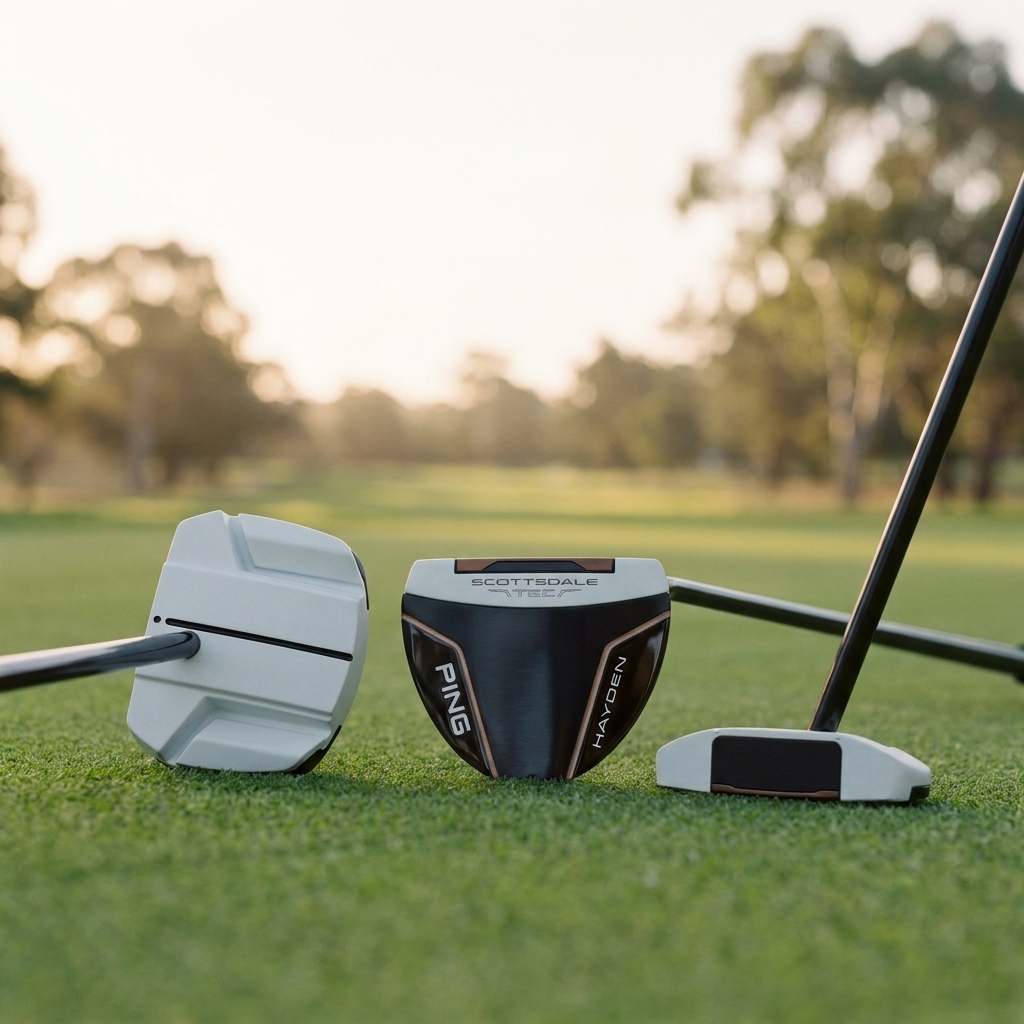
There’s plenty of excitement surrounding putting at the moment, with zero-torque putters becoming one of the biggest trends in golf equipment.
L.A.B. Golf was one of the first brands to bring the technology to widespread attention, making a significant impact with its Lie Angle Balanced putters. Since then, a number of major manufacturers have introduced their own interpretations of the concept, giving golfers more options than ever when it comes to finding a putter designed to improve stability and consistency.
It’s an interesting development when you consider how golfers spend their money on equipment. Many will happily spend close to $1,000 on a driver that might be used only 14 times during a round, yet often spend considerably less on a putter, despite using it on almost every hole.
So, is investing in a premium putter worthwhile? The growing number of innovative designs appearing on both the men’s and women’s professional tours certainly suggests that putting technology is becoming increasingly important. Let’s take a look at some of the latest options.
TaylorMade Spider ZT
First up is the TaylorMade Spider ZT, which combines the stability of the popular Spider mallet design with zero-torque technology.
The key idea behind zero-torque technology is to reduce unwanted rotation of the putter face during the stroke. With the shaft positioned directly in line with the centre of gravity, the Spider ZT is designed to resist twisting and minimise face rotation, helping the golfer maintain a more controlled stroke.
This can be particularly beneficial for golfers who struggle with inconsistent face rotation or the yips. By reducing the need to manipulate the putter face throughout the stroke, the design aims to make the putting motion feel more stable and repeatable.
The Spider ZT also uses a multi-material, high-MOI construction. A dense 303 stainless steel front section is combined with a lightweight 6061 aluminium rear section, allowing more weight to be positioned around the perimeter of the head. The result is greater stability when contact isn’t made directly from the centre of the face.
TaylorMade’s Pure Roll insert is another important part of the design. The Surlyn and aluminium insert features grooves positioned at a 45-degree angle, helping promote forward roll and more consistent distance control.
The Spider ZT is available in several configurations, including a standard model with a 370g head in 33, 34 and 35-inch lengths, a counterbalanced version with a heavier 395g head in 36 and 38 inches, and a 46-inch broomstick model featuring a substantial 470g head.
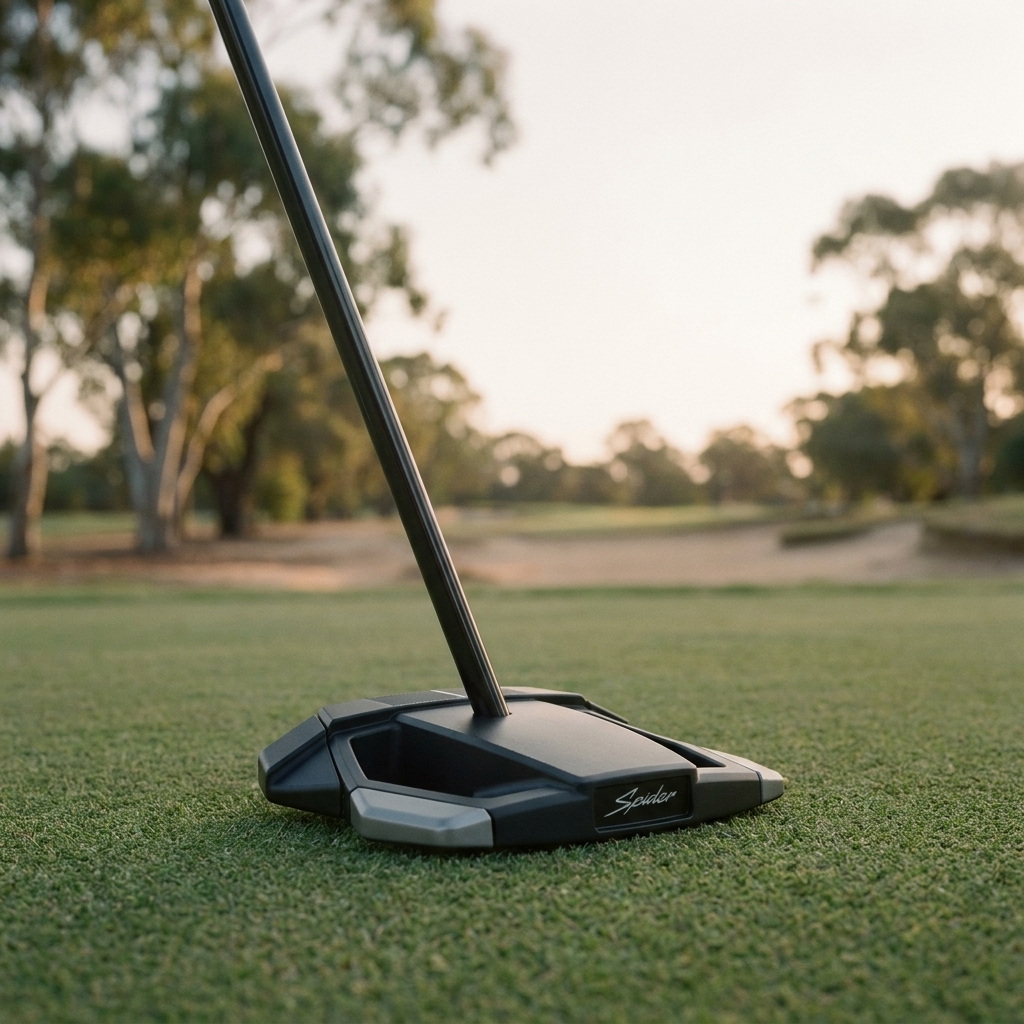
PING Scottsdale TEC
Next is the PING Scottsdale TEC range, which takes a slightly different approach to helping golfers improve their putting.
The Scottsdale TEC mallets feature PING’s Eye Q Technology, which has been developed using eye-tracking research. The idea is to create a clear focal point on the top rail of the putter, combined with an extended alignment line, helping the golfer establish a more consistent visual reference before starting the stroke.
For many golfers, alignment is one of the biggest challenges on the green. You can have a technically sound stroke, but if the putter is aimed incorrectly at address, the ball is unlikely to finish where you intended. The Eye Q system is designed to make that initial alignment process more intuitive.
The Scottsdale TEC also features a high-MOI, multi-material construction. A lightweight aluminium body is paired with a dense stainless-steel sole plate, allowing weight to be positioned low and around the perimeter of the head. This provides additional forgiveness and stability, particularly on off-centre strikes.
A one-piece PEBAX elastomer insert provides a soft but responsive feel at impact, helping golfers control distance across different lengths of putt.

Scotty Cameron Phantom
Next, we have the Scotty Cameron Phantom range, including several face-balanced and low-torque options.
Scotty Cameron has traditionally produced putters with a degree of toe flow to complement golfers with a naturally arcing stroke. However, the Phantom range includes several designs that offer a more face-balanced or low-torque setup.
The Phantom 5s, for example, features a straight, zero-offset shaft and is close to face-balanced. The design provides a clear view of the leading edge and can suit golfers who prefer a more mechanical, straight-back-and-straight-through style of stroke.
The Phantom 11 takes a different approach, combining stainless steel and aircraft-grade aluminium in a precision-milled, high-MOI mallet. The design provides plenty of stability while also helping with alignment and consistency.
There is also the OC (Onset Centre) model, which uses a centre-shafted configuration designed to help the face remain square to the stroke path for longer.
While many Scotty Cameron putters are designed to complement a stroke with some natural face rotation, these lower-torque models are more resistant to twisting. They may therefore be particularly suited to golfers who have a straighter putting stroke or prefer to minimise face rotation.
Odyssey Ai-ONE Square 2 Square
Our final collection comes from Odyssey, with the Ai-ONE Square 2 Square range offering one of the most extensive selections of zero-torque designs.
These putters combine zero-torque technology with Odyssey’s Ai-ONE insert, which has been designed to improve consistency in ball speed across the face. This is particularly important on off-centre strikes, where even a small reduction in ball speed can leave a putt considerably short of the hole.
Odyssey used artificial intelligence to develop specialised contours on the aluminium backer of the insert. These contours are designed to minimise the loss of ball speed on mishits, while a grooved White Hot urethane layer provides the familiar feel and sound associated with Odyssey’s popular White Hot inserts.
The Square 2 Square design also uses a centre-shafted configuration with built-in forward shaft lean. This encourages a natural forward press at address and is designed to help keep the putter face square throughout the stroke.

So, Is Zero Torque the Future?
Zero-torque technology is certainly creating plenty of interest, and it’s easy to see why. The basic idea is relatively simple: reduce unwanted face rotation, increase stability and make it easier for the golfer to return the putter face squarely to the ball.
But, as with any piece of golf equipment, there isn’t one putter that will suit every golfer.
Putting strokes vary considerably. Some golfers naturally rotate the face throughout the stroke, while others have a much straighter motion. Some prefer a traditional blade, while others gain confidence from a larger mallet with plenty of alignment assistance.
The important thing is finding a putter that complements your stroke rather than simply buying the latest technology because it’s new.
That said, the growth of zero-torque putters across the major equipment brands and their increasing presence on professional tours, suggests this is more than just another equipment fad.
For golfers looking to improve their putting, it might be worth spending a little more time looking at the club that ultimately gets used on almost every hole.
After all, your driver might get you there, but the putter is what gets the ball in the hole.
